








Every WordPress agency hits the same wall. The founder can deliver great work personally, but the moment a second or third project runs in parallel, things start slipping: missed emails, inconsistent builds, launches that feel improvised. The wall is not talent. It is the absence of systems.
Standard operating procedures, SOPs, are simply “how we do this here” written down clearly enough that someone competent can follow them without inventing the process. This guide shows you which systems a WordPress agency needs first, how to document them without drowning in bureaucracy, and how to make them the engine of predictable growth.
The Agency Bottleneck Is Always Process
When delivery feels chaotic, the instinct is to hire. Sometimes that is right, but adding people to a broken process just produces chaos at a larger scale. Before hiring, ask whether the work is actually documented. If only the founder knows how a project moves from kickoff to launch, the founder is the bottleneck, and every new hire will queue behind them asking questions.
Systems do three things for an agency. They make quality consistent regardless of who does the work. They make onboarding fast, because new team members learn the process instead of shadowing for months. And they make the business sellable and resilient, because delivery no longer lives in one person’s head. Start documenting before you feel ready; perfect SOPs written next year help no one.
Start With Client Onboarding
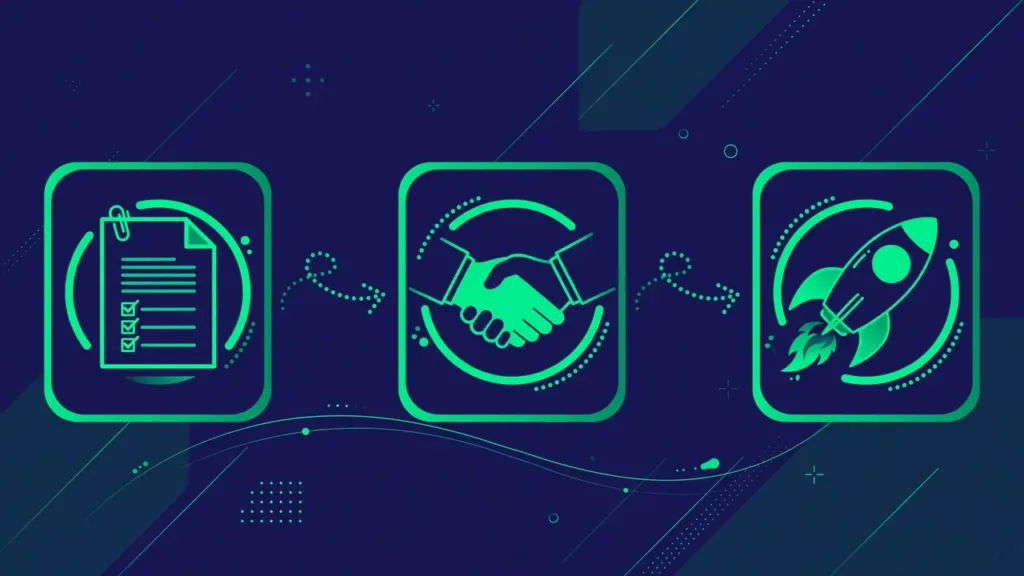
Onboarding is the highest-leverage system because it sets the tone for everything after. A chaotic onboarding, scattered emails, missing logins, unclear timelines, teaches the client that working with you will be chaotic. A crisp onboarding teaches them they hired professionals.
Document the sequence end to end:
- Welcome package: what happens next, who does what, key dates, and how communication works.
- Access collection: hosting, domain, analytics, and brand assets, gathered through one structured form, not a twenty-email thread.
- Kickoff call agenda: goals, audiences, must-haves versus nice-to-haves, and success criteria, captured in writing.
- Internal handoff: the brief the delivery team receives, so nothing the client said in sales gets lost.
Templatize everything: the welcome email, the intake form, the kickoff agenda, the handoff doc. Each template removes a decision and a delay. Review onboarding feedback after every project for the first year; clients will show you exactly where the friction is.
Standardize Your Build Process
Every WordPress build your agency ships should start from the same foundation. Define your standard stack: the base theme approach, the core set of plugins for forms, SEO, security, backups, and performance, and the starter configuration you apply to every project. Standardization is not about limiting creativity; it is about not re-deciding the basics on every project.
The build checklist
Write the build as a checklist that runs from staging setup to launch: install and configure the stack, implement the design, enter content, configure forms and integrations, set up analytics, harden security basics, optimize performance, and run pre-launch QA. Each item links to its detailed SOP. A developer joining mid-project should be able to see exactly where things stand.
Environments and version discipline
Decide once how you handle development, staging, and production, and how code and configuration move between them. Even for small sites, a staging step before production changes prevents the classic “it worked on my machine” launch disaster. Document who is allowed to push to production and when.
QA Checklists That Prevent Embarrassing Launches
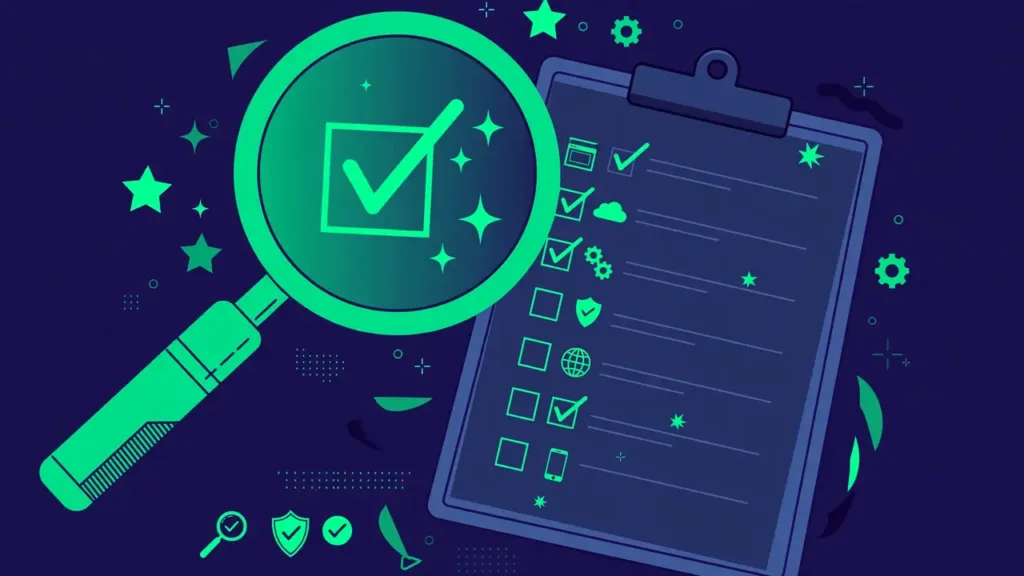
Nothing damages an agency’s reputation faster than a launch with broken forms, missing pages, or a site that falls over on mobile. QA cannot depend on memory. It needs a checklist, run the same way every time, by someone other than the person who built the site.
- Content: no placeholder text, correct contact details, working navigation on every page.
- Forms: every form submits, notifications arrive, spam protection works, confirmation messages display.
- Responsive: key pages checked at phone, tablet, and desktop widths; tap targets usable; no horizontal scrolling.
- Performance: image sizes sane, caching active, no console errors, acceptable load times on a throttled connection.
- SEO basics: titles and descriptions present, sitemap generated, search visibility settings correct for launch.
- Security basics: updates current, strong credentials, login protection active, backups scheduled before go-live.
Make QA sign-off a formal gate: the site does not launch until the checklist is complete and signed. The five minutes of ceremony prevents the five hours of post-launch firefighting.
An SOP is not finished when it is written. It is finished when a new team member can follow it without asking you a single question.
Project Management Rhythms
Systems need rhythm to survive. Define the heartbeat of your delivery: a weekly internal review of every active project, a regular client update cadence, and a clear definition of what “blocked” means and who unblocks it. Tools matter less than consistency; the fanciest project board in the world does not help if nobody looks at it.
Standardize your project phases and what completes each one. Discovery ends with a signed brief. Build ends with QA sign-off. Launch ends with the client trained and the care plan offered. Clear gates prevent the slow bleed of projects that are “almost done” for six weeks, and they give you honest data about where time actually goes.
Hiring Against the System, Not Around It
Here is the payoff: once the work is documented, you hire for execution within a system rather than for rare unicorns who can invent everything. That widens your hiring pool enormously and lowers the risk of every hire. A solid mid-level developer with great SOPs will outperform a brilliant one improvising, and will do it more consistently.
Build hiring itself into a system: a scorecard for each role, a paid trial task that mirrors real work, and a structured onboarding plan for the first thirty days that walks through your SOPs in order. Your systems teach new hires how you work; your culture teaches them why. Both need to be deliberate.
Review and Improve Quarterly
SOPs rot. Tools change, the team learns better ways, and edge cases accumulate. Schedule a quarterly systems review: walk through each core SOP, update what is outdated, delete what is unused, and capture improvements the team discovered while doing the work. Assign an owner to every SOP so “someone should update this” becomes a name, not a wish.
Measure whether the systems are working: on-time delivery rate, average revision rounds, post-launch bug counts, and team utilization. When the numbers improve, the systems get the credit, and the team learns that process is not bureaucracy. It is how a group of talented people reliably produces excellent work, project after project, without burning out the founder.
The 15-Minute SOP Habit
The reason agencies never document anything is the belief that SOPs require a documentation project. They do not. They require a habit: every time you do something twice, spend fifteen minutes writing down how. Fifteen minutes is short enough to actually happen and long enough to capture a real procedure.
The lowest-friction method is narrated capture. Do the task once while recording your screen and talking through each step, then turn the recording into a written checklist. The video is the backup; the checklist is the SOP. Store both in one shared place with a consistent naming convention, so “how do we do X?” always has exactly one answer location.
Keep the format ruthlessly simple: purpose in one sentence, prerequisites, numbered steps, and a definition of done. Screenshots where the interface matters; no essays. Assign every SOP an owner and a review date, because undated documents rot silently. And celebrate contributions: when a team member writes a good SOP, say so publicly. You are building a culture where knowledge is shared by default, and culture is built from what gets recognized. Documented process is the difference between owning a business and owning a stressful job.
Within ninety days of starting the habit, you will have thirty to fifty SOPs covering the work you actually do. That is not a documentation project. That is an agency that can survive someone’s vacation.
Start this week with one SOP: your client onboarding. Write it as you do it for the next client, templatize the repeated parts, and feel the difference. Then do the build checklist, then QA. Brick by brick, you are replacing heroic effort with reliable process, and that is what scaling actually looks like.